




Demonstration of Massive Connectivity for the 6G Era
- Successful Simultaneous Communications Using a Quantum Computer -
Abstract
The National Institute of Information and Communications Technology (NICT, President: TOKUDA Hideyuki, Ph.D.) developed a hybrid signal processing method that integrates an annealing-based quantum computer with classical computing for next-generation mobile communication systems. By implementing this method into a base station, simultaneous communications with 10 devices were successfully demonstrated through outdoor experiments, addressing the massive connectivity requirements anticipated for the 6G era. The proposed approach utilizes quantum annealing to efficiently solve the combinatorial optimization problem arising in signal detection under multi-antenna and multi-carrier transmission. This result represents a significant step toward realizing large-scale machine-to-machine communications in future 6G networks, including applications involving drones, robots, and XR devices.
This work was presented on January 9, 2026, at the international conference IEEE Consumer Communications & Networking Conference (CCNC) 2026.
Achievements
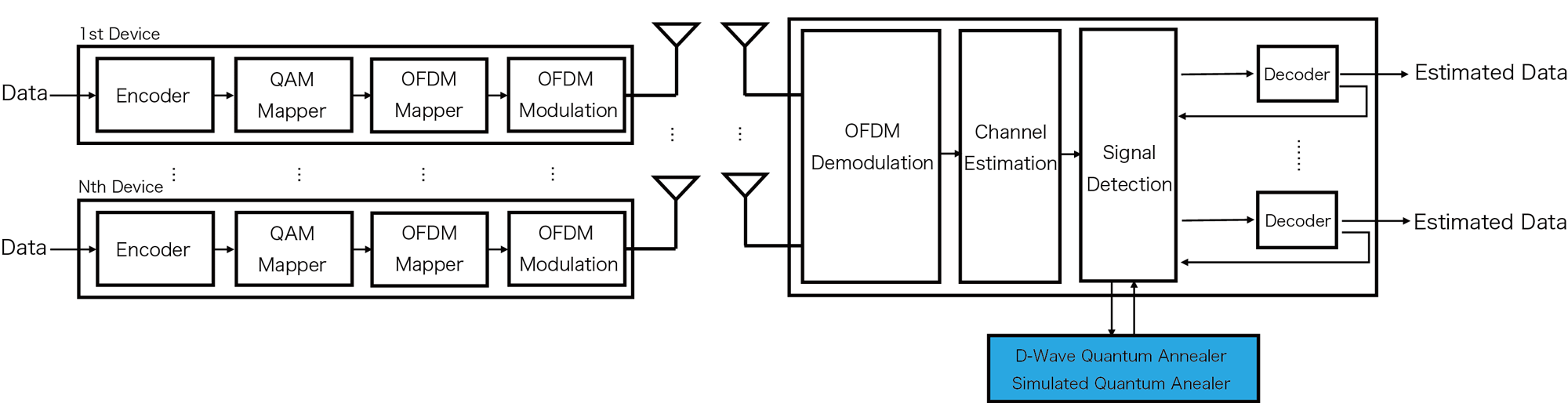
Figure 1. New hybrid signal processing method combining a quantum annealing machine and a classical computer.
[Click picture to enlarge]
[Click picture to enlarge]
With the widespread adoption of drones, robots, and XR devices, next-generation wireless systems (6G) are expected to provide significantly enhanced uplink massive connectivity. Compared with current fifth-generation mobile communication systems (5G), device density in 6G networks is anticipated to increase by more than an order of magnitude. One promising technology for addressing this challenge is non-orthogonal multiple access (NOMA), which enables multiple devices to transmit simultaneously over the same time and frequency resources. In such scenarios, signals from multiple devices are superposed at the base station and must be individually detected. If the number of devices is denoted by 𝐾 and the modulation order by each device by 𝑀, the number of signal combinations grows exponentially as 𝑀𝐾. Consequently, the computational complexity increases rapidly with the number of connected devices, leading to large processing latency and making real-time detection difficult.
Previously, we developed a hybrid signal processing method that combines a quantum annealing machine with classical computing (hereafter referred to as the “previous method”). In this framework, the quantum annealing machine efficiently explores candidate signal combinations, while a classical computer performs post-processing to estimate the probability distributions required for signal detection, thereby achieving both high detection accuracy and fast processing. However, the effectiveness of the previous method had only been demonstrated for limited communication scenarios. Its applicability to multi-antenna and multi-carrier transmission, which is essential component of both 5G and future 6G systems, remained unclear. To address this limitation, NICT developed a new hybrid signal processing method that integrates the quantum annealing machine with a classical computer and is applicable to multi-antenna and multi-carrier transmission (see Figure 1). The proposed method also incorporates essential components of modern mobile communication systems, such as channel estimation using reference signals, making it suitable for practical 6G deployment.
We evaluated block-error-rate performance of the proposed method through numerical simulations under the following conditions: four receive antennas at the base station, QPSK modulation (𝑀=4), and eight connected devices (𝐾=8). This setting corresponds to a combinatorial optimization problem involving approximately 48≈60,000 possible signal combinations. In these simulations, simulated quantum annealing (SQA) was used as the annealing method. The results confirmed that the proposed method achieves higher detection performance than the widely used linear minimum mean square error (LMMSE) approach (see Figure 2).
Subsequently, the proposed method was implemented at a base station in a wireless communication experimental system, and outdoor over-the-air (OTA) experiments were conducted (see Figure 3). Using the same system parameters as in the simulations, performance was evaluated using both SQA and the D-Wave quantum annealing machine. The experiments demonstrated error-free signal detection for both annealing methods (see Figure 4). Further experiments confirmed successful simultaneous communication with up to 10 devices.
These results demonstrate that the proposed hybrid signal processing method can effectively support the massive connectivity expected in the 6G era, corresponding to a tenfold increase in device density compared with 5G systems.
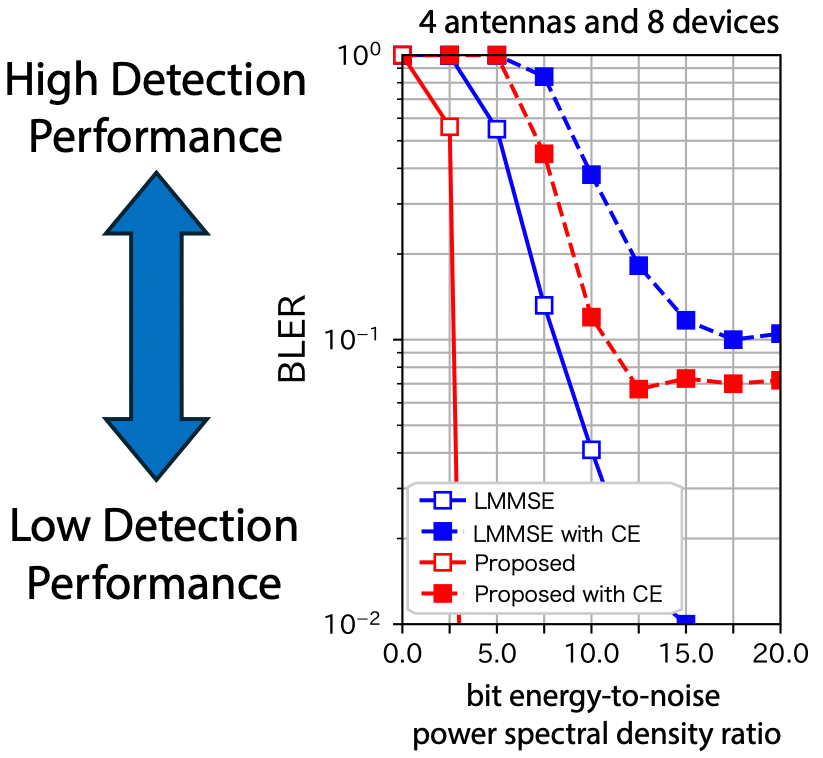
Figure 2. Comparison between the proposed method and the conventional LMMSE method based on computer simulations.
[Click picture to enlarge]
[Click picture to enlarge]
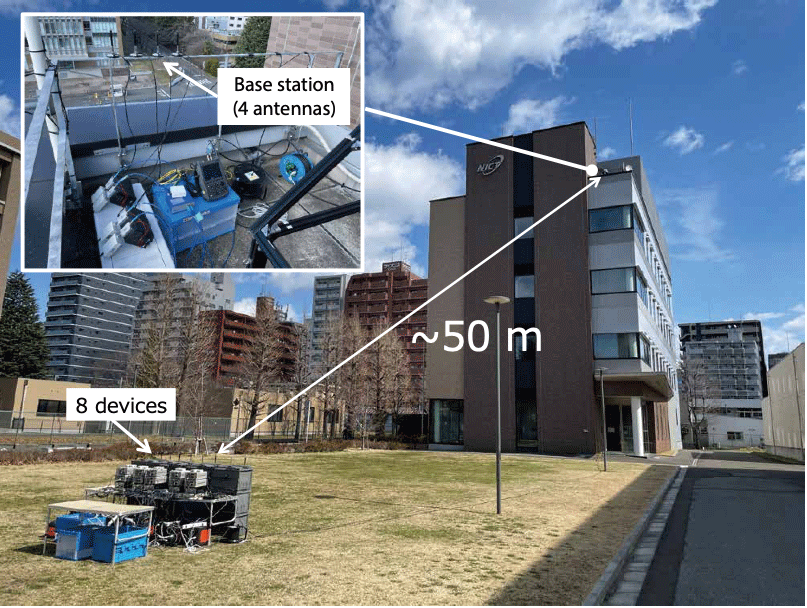
Figure 3. Photograph of the outdoor OTA experiment.
[Click picture to enlarge]
[Click picture to enlarge]
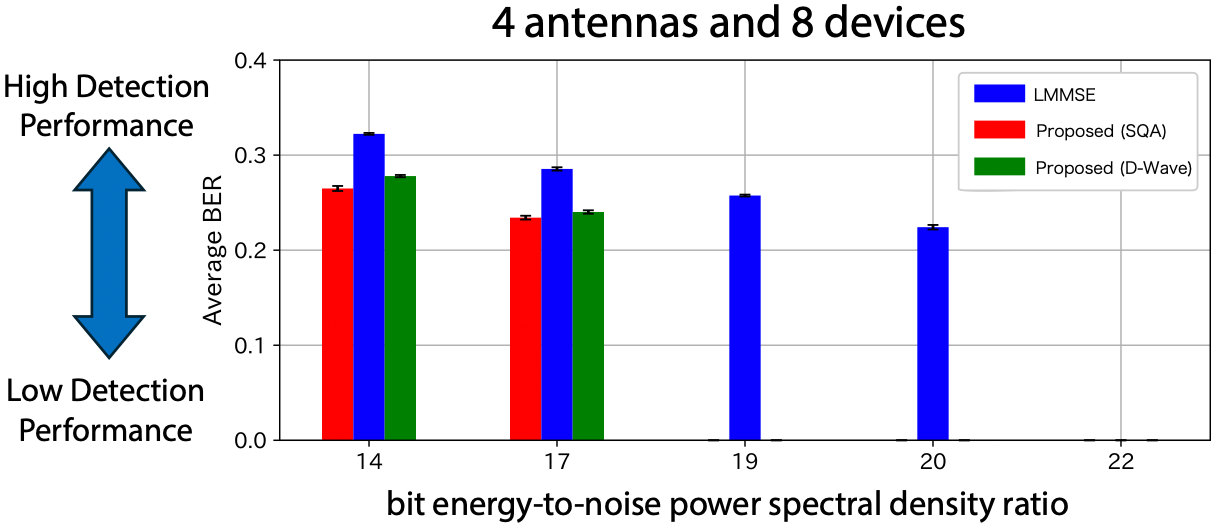
Figure 4. Comparison of the proposed method and the LMMSE method on outdoor OTA experiments.
[Click picture to enlarge]
[Click picture to enlarge]
Future Prospects
This achievement represents a major step toward realizing the massive connectivity required in the 6G era and is expected to enable a wide range of machine-type communications involving drones, robots, and XR devices. Going forward, we will continue to advance experimental demonstrations aimed at supporting even larger-scale massive connectivity.
This work was supported by MIC Japan SCOPE (project number: JP235003004).
Technical Contact
YONAGA Kouki, TAKIZAWA Kenichi
Sustainable ICT Systems Laboratory
Resilient ICT Research Center
Network Research Institute
E-mail: sis_contact ml.nict.go.jp
ml.nict.go.jpMedia Contact
Press Office
Public Relations Department
E-mail: publicitynict.go.jp
nict.go.jp